Discover Amazing Rainforest Amazon Animals: A Fun Wildlife Guide
Step into the thick, green trees of the Amazon, and you enter a whole new world. I have always loved looking at pictures of this amazing jungle, and learning about the creatures living there is even better. The Rainforest Amazon Animals is the biggest jungle on Earth. It is warm, wet, and packed with life from the ground all the way to the treetops. In fact, millions of different kinds of plants and animals call this giant green home their very own. If you want to meet some of the coolest rainforest Amazon animals, you are in the right place. We will take a fun walk through the trees and rivers to see who lives there. You will find big cats, flying colors, and swimming giants. Let us start our big jungle adventure right now and see what makes these creatures so special and wild!
Meet the Jaguar: The King of the Jungle Floor
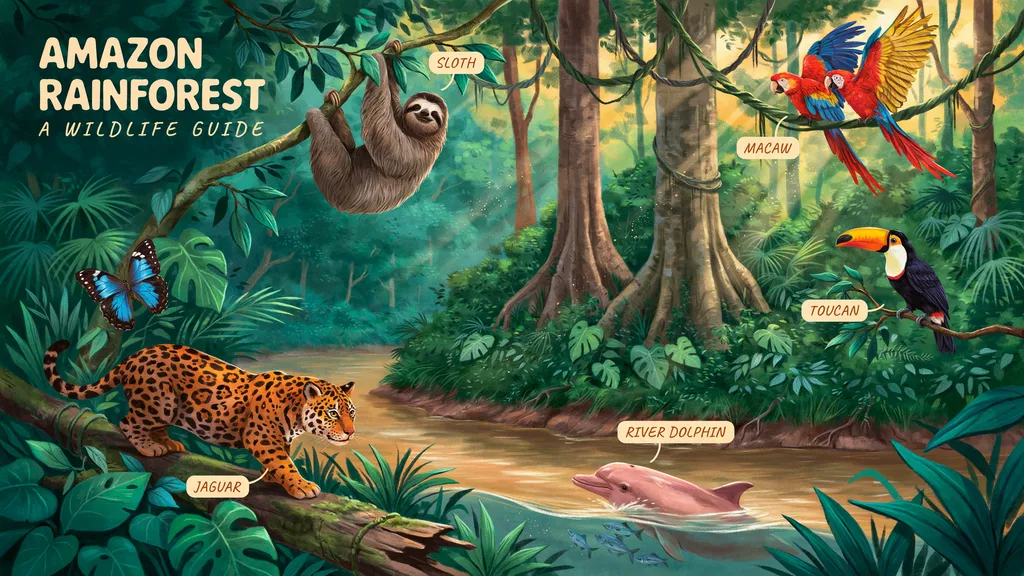
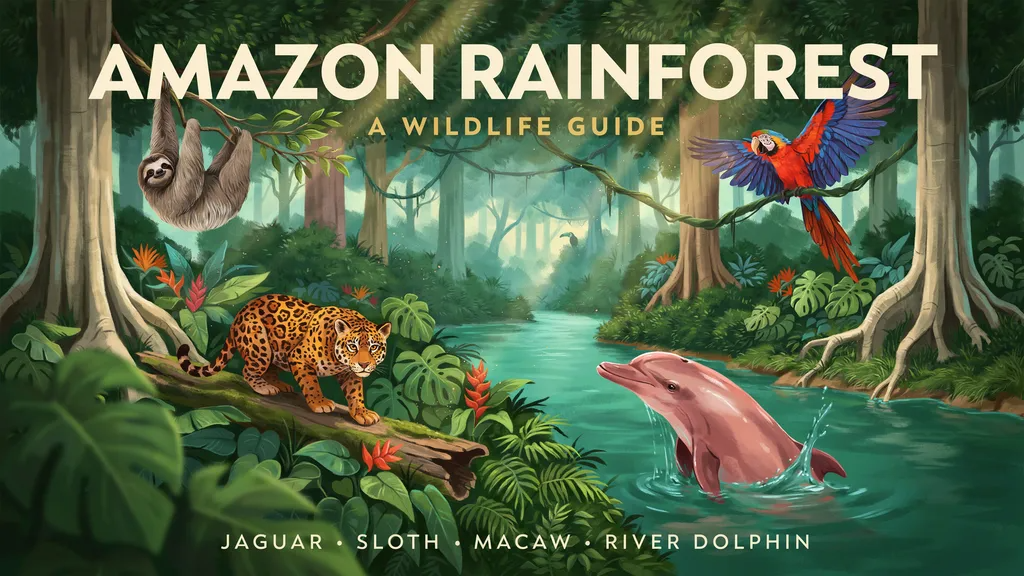
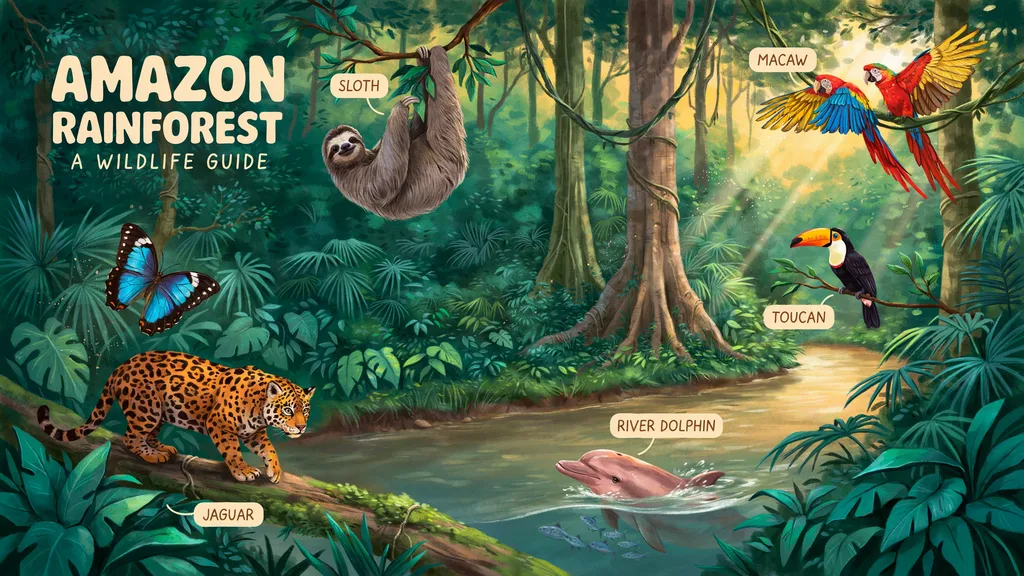
The jaguar is one of the most powerful and sneaky rainforest Amazon animals you will ever learn about. These big cats have gorgeous yellow fur covered in dark spots that look like roses. I think they look a bit like leopards, but jaguars are heavier and stronger. They love water, which is unusual for most cats. You might see a jaguar swimming across a wide river to hunt for fish or turtles. They walk softly on the soft jungle floor, making sure no one hears them coming. Being the top hunter means they keep the rest of the jungle balanced. They are quiet, fast, and very smart. Learning about the mighty jaguar always makes me feel amazed by how tough and cool wild cats can truly be in their natural home.
Slow Down with the Three-Toed Sloth
Hanging high up in the green leaves, the three-toed sloth is a very famous and funny animal. These gentle creatures move so slowly that green algae actually grows right on their fur. That green coat helps them hide from bigger animals like jaguars and big eagles. I love how sloths spend almost all of their lives hanging upside down. They eat leaves, sleep for many hours a day, and only climb down to the ground once a week. Their long claws hook onto branches like built-in swings. They never seem to rush or worry about anything at all. Watching a sloth move is like watching a slow-motion movie, and their peaceful way of living teaches us to take a nice deep breath and relax.
Colorful Macaws Painting the Sky
If you look up at the bright blue sky above the trees, you might spot some flying rainbows. Scarlet macaws are stunning birds and some of the loudest rainforest Amazon animals around. Their bright red, yellow, and blue feathers stand out against the dark green leaves. They have strong, curved beaks that can crack open hard nuts like tiny tools. I once heard a recording of them calling out, and their loud squawks echo all through the forest. Macaws mate for life and fly together in pairs or big family groups. They add so much color and happy noise to the jungle. Seeing a flock of macaws fly past is a bright and beautiful moment you will never forget in your life.
The Pink River Dolphin of the Amazon
Did you know there are dolphins that live in freshwater rivers? The boto, or pink river dolphin, is a magical creature swimming through the winding Amazon waters. These dolphins are actually born gray, but their skin turns a soft pink as they grow older. Unlike ocean dolphins, their neck bones are loose, so they can turn their heads side to side to look around flooded trees. I think that is a super neat trick! They use echoes to find fish in muddy water where they cannot see very well. Local people tell lovely stories and myths about these smart pink swimmers. Seeing a pink nose pop up above the river water is a truly wonderful and surprising sight in the deep jungle.
Tiny Poison Dart Frogs with Big Colors
Do not let their pretty colors fool you! Tiny poison dart frogs are small rainforest Amazon animals that carry a big warning. Their skin glows with bright blue, yellow, or red shades to tell other creatures to stay away. That bright look is called warning coloration. I learned that these frogs get their strong poison from the tiny bugs they eat on the forest floor. They are smaller than your thumb, yet they are some of the most famous creatures in the whole jungle. Indigenous tribes used to touch their blowdarts to the frog’s skin for hunting long ago. They are fascinating to look at from a safe distance, proving that big power can come in very tiny packages.
The Giant Green Anaconda in the Water
The green anaconda is a massive snake and one of the heaviest creatures in the whole world. These giant swimmers live in slow rivers, streams, and swampy areas of the jungle. Their dark green and black patterns help them blend right into the muddy water and floating plants. I know snakes can sometimes seem a bit scary, but anacondas play an important role in nature by keeping other animal numbers healthy. They do not have venom; instead, they squeeze their meals gently and swallow them whole. They can stay under the water for a long time without breathing. Finding an anaconda resting by a river bank shows just how wild and mysterious the wet Amazon riverways truly are.
Capybaras: The Friendliest Giant Rodents
Meet the capybara, which is the biggest rodent on the entire planet. They look like giant guinea pigs and are some of the friendliest rainforest Amazon animals you can ever find. Capybaras love to hang out near rivers and ponds in big family groups. They are fantastic swimmers with webbed toes that help them paddle through the water easily. I always smile when I see pictures of birds or monkeys sitting right on top of a calm capybara’s back. They are super chill and get along with almost everyone in the jungle. Eating grass and water plants keeps them happy all day long. They show us that being gentle and kind makes you a great friend to all your neighbors in the wild.
Spider Monkeys Swinging Through the Treetops
High up in the canopy, spider monkeys move like flying acrobats through the green branches. They have long, skinny arms and legs, plus a super strong tail that works like an extra hand. I think it is amazing how they can grab a branch with just their tail while eating fruit. They travel in noisy groups, calling out to each other and jumping across wide gaps between trees. Eating yummy fruits helps them drop seeds all over the forest, which grows new trees. They are smart, playful, and full of bouncing energy every single day. Watching spider monkeys chase each other through the upper green leaves is one of the most fun and lively shows the Amazon jungle puts on for visitors.
Leafcutter Ants: The Hardest Workers
Down on the dirt path, you can watch tiny leafcutter ants doing a huge job together. These industrious rainforest Amazon animals cut pieces of green leaves with their sharp mouths and carry them like little green umbrellas. Earning the title of tiny construction workers, they march in long, neat lines back to their underground home. They do not actually eat the leaves directly. Instead, they use the chewed-up leaves to grow a special fungus garden for their food. I find their teamwork so inspiring. Millions of ants work as one big family to keep their underground city running smoothly. Looking closely at an ant trail shows that even the smallest creatures can move mountains of work.
The Harpy Eagle Looking From Above
The harpy eagle is a giant bird with sharp talons as big as grizzly bear claws! Sitting high in the tallest trees, it watches the forest floor for any movement. These powerful hunters are some of the largest eagles in the whole world. Their grey crest feathers puff up when they feel excited or alert. I think their intense eyes look like they see everything happening in the green maze below. They swoop down quietly to catch monkeys and sloths right out of the trees. Protecting these magnificent birds is very important because they need huge areas of healthy forest to live. Spotting a harpy eagle is a rare and breathtaking treat for anyone exploring the wild Amazon skies.
Detailed Animal Comparison Table
| Animal Name | Where It Lives | What It Eats | Cool Fun Fact |
| Jaguar | Jungle floor / Rivers | Meat (fish, deer) | Loves to swim in water |
| Three-Toed Sloth | High in trees | Green leaves | Green algae grows on fur |
| Scarlet Macaw | High in treetops | Nuts and seeds | Mates for life with partner |
| Pink River Dolphin | Amazon rivers | Fish and crabs | Skin turns pink as it ages |
| Poison Dart Frog | Forest floor | Tiny bugs and ants | Bright colors warn predators |
| Green Anaconda | Swamps and rivers | Fish, birds, mammals | Can stay underwater for long |
| Capybara | Near water / banks | Grass and plants | Largest rodent in the world |
| Spider Monkey | High canopy | Fruit and leaves | Uses tail like an extra hand |
| Leafcutter Ants | Underground / trails | Fungus from leaves | Carries leaf pieces like flags |
| Harpy Eagle | Tallest tree tops | Monkeys and sloths | Talons are as big as bear claws |
Frequently Asked Questions
What is the most dangerous animal in the Amazon rainforest?
Many people think big cats like jaguars or giant snakes are the most dangerous, but tiny creatures like mosquitoes carry diseases, and poison dart frogs have strong toxins. It is best to respect all wildlife and keep a safe distance.
Do pink river dolphins really exist in the Amazon?
Yes, they do! Boto or pink river dolphins live in the freshwater rivers and flooded forests of the Amazon basin. They are very smart and have a unique pinkish skin color.
Why do sloths move so slowly?
Sloths have a very slow metabolism because their diet of leaves does not give them a lot of energy. Moving slowly also helps them stay hidden from hungry eagles and big cats looking for food.
Are capybaras friendly to humans?
Capybaras are very calm and gentle animals. They usually do not mind other animals or humans nearby, but they are still wild animals and should be watched peacefully without bothering them.
What do macaws eat in the wild?
Macaws love eating seeds, nuts, fruits, and sometimes special clay from river banks that helps their tummies digest hard plant foods safely. Their strong beaks crack open tough shells easily.
How do leafcutter ants help the jungle?
By cutting and carrying leaves underground to grow fungus, they help break down plant material and turn nutrients back into the soil, which helps new trees and plants grow strong.
Conclusion
The Amazon jungle is an incredible place full of life, color, and wild wonder. From the slow-moving sloth hanging in the trees to the smart pink dolphin swimming in the river, every creature has a special job to do. Learning about these wonderful animals helps us see why keeping the rainforest safe and clean is so important for our planet. We all share this big Earth with these amazing creatures. I hope you enjoyed meeting these wild neighbors today as much as I did writing about them. Let us keep caring for nature, protecting green spaces, and learning more cool facts every day. Which of these jungle animals is your absolute favorite to learn about?